Computer vision outside the lab: two stories from the road and the eye clinic
Models look dazzling in the slide deck. The truth shows up at noon on a dusty highway, or in a clinic that sees eighty patients a day. These are two stories about the gap between “98% on the test set” and “actually works…

Models look dazzling in the slide deck. The truth shows up at noon on a dusty highway, or in a clinic that sees eighty patients a day. These are two stories about the gap between “98% on the test set” and “actually works”.
Story one: Darb — AI traffic incidents
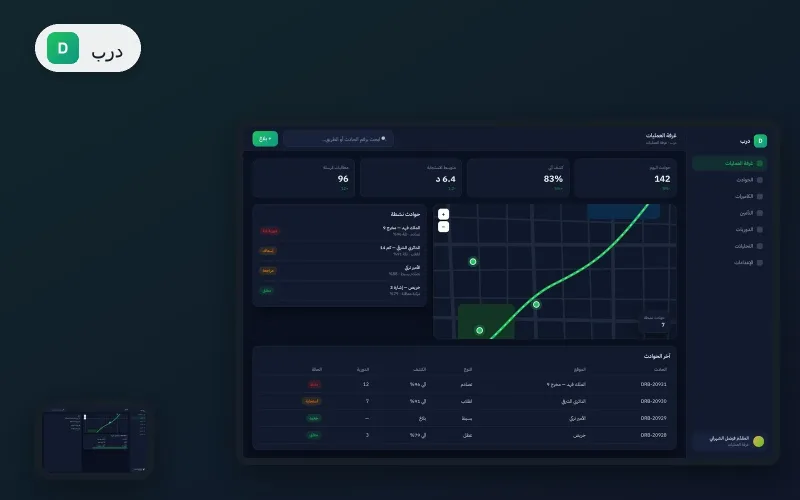
Darb is a traffic-incident management system: cameras, detection models, and tight integration with insurers. The first problem was not detection, it was dust. A dirty lens turns a truck into a shadow, and a model trained on clean images collapses. The fix: a frame-quality assessment stage before detection, and an automatic maintenance alert when quality drops for three consecutive days.
The second problem was human: the insurer’s claims handler does not trust a “black box”. So every incident is exported with the original frames, the detection boxes, the confidence score, and a “needs review” decision when confidence falls below a threshold. Trust did not come from higher accuracy; it came from showing the evidence.
Story two: Diabetes Vision Detector — retinopathy
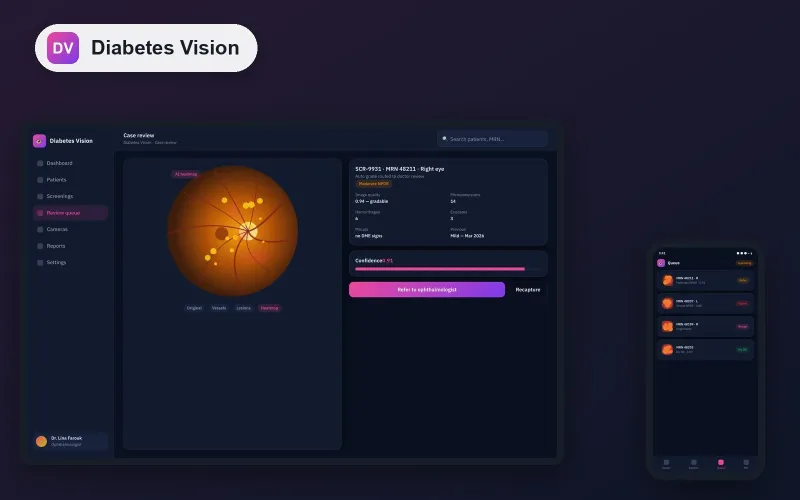
Screening diabetic retinopathy from fundus images is a task the model masters on public datasets. In the real clinic the camera, the lighting, and the share of “ungradable” images were different. The first production month had a 19% rejection rate — the model refusing to judge a poor image. It looked like failure; it was actually the most important feature.
A medical model that says “I cannot judge” is better than one that is confidently wrong. We defined rejection as an official outcome with its own path.
What we did: training on the clinic’s own images (with consent and anonymisation), and visual guidance for the technician at capture time (“retake — light reflection”). Rejection dropped to 6%, and “needs a doctor” remained a respected path.
A short third story: Smart Wear
Smart Wear fuses wearable hardware with AI for authentication. Same lesson in different clothes: biometric signals shift with heat and fatigue, and a model that does not know its limits becomes either annoying (rejecting the owner) or dangerous (accepting someone else). We built “grey zones” that ask for a second factor instead of a hard verdict.
What the three stories share
- Input quality before intelligence: measure image/signal quality and decline politely.
- Evidence with the decision: frame, box, confidence, reason.
- A path for grey cases: human review, second factor, or recapture.
- Train on data from the actual site: no public dataset looks like your cameras.
Computer vision in the field is not model science; it is operations science. The models that work are the ones designed to admit what they cannot see.